
Report Guide
Your Yatharth Kundali, Explained Simply
You don't need to know astrology to use your Yatharth Kundali — you just need to know your question. This guide shows you exactly where in your 250+ page report to look, explained in plain language, no jargon required.
Your Research Guide
Inside Your Yatharth Kundali: A Complete Navigational Guide
Every Yatharth Kundali is 250+ pages of dense, hyper-personalised calculation — tied to the exact latitude, longitude, and second of your birth. Nothing in it is generic; the mathematics is worked out fresh for you.
Pop-astrology focuses on your "Sun Sign" and offers broad generalisations for many people at once. The Yatharth Kundali starts instead with a detailed calculation of planetary positions for your recorded birth time and place, then presents their traditional Vedic interpretation in a clear reference report.
This guide explains what is inside your personalised document, how its sections connect, and where to look when you want astrological context for career, finances, relationships, or a changing phase of life.
Think of your Kundali not as a novel you read once cover to cover, but as a reference manual divided into eight core sections — designed to be revisited when you want context for a decision or a changing phase of life.
1The Foundational Blueprints
This section establishes the raw astronomical reality of your birth — your core planetary strengths, elemental balances, and the fundamental energetic architecture you were born with. This is your baseline reality.
Panchang & Birth Details (The Five Limbs of Time)
The exact lunar day (Tithi), constellation (Nakshatra), Yoga, Karana, and Vara active at your birth.
How to use it: Use this page to understand the traditional qualities associated with your birth Tithi, Nakshatra, Yoga, Karana, and weekday. Treat those qualities as context for reflection, not as a guarantee that a particular day or action will succeed.
Lagna, Bhava Kundli, Chalit (Cusp), and Rasi-Navamsa Charts
The foundational pillars of Vedic astrology. The Lagna (Ascendant) shows your physical path and outward personality.
How to use it: Use your Lagna chart for the broad structure of the birth chart, then consult the Chalit and Bhava charts to see how exact degrees can shift a planet's house placement. The Navamsa (D-9) adds another traditional perspective on marriage, partnership, and the underlying strength of planets.
Sudershan Chakra
A combined, 360-degree chart aligning your Ascendant, Moon, and Sun into one unified visual wheel.
How to use it: Cross-reference the three viewpoints to compare outward circumstances through the Ascendant, emotional perspective through the Moon, and purpose, confidence, or authority through the Sun.
Planet Relations & Shadbala (Six-Fold Strength)
A complex mathematical breakdown of your planets' exact power levels based on six different criteria — directional strength, positional strength, motional strength, temporal strength, and more.
How to use it: Compare a planet's apparent prominence in the main chart with its calculated strength. Shadbala can show that a visually prominent planet has limited support in one area while a quieter planet is stronger in another. Use that comparison to understand the report's reasoning, not as a promise of career or financial results.
Favourable Points & "How to Wear Stone" Guide
A calculated guide to the numbers, colours, directions, and traditional wearing instructions associated with your chart.
How to use it: Use it as a quick reference for the report's favourable points. If a gemstone is discussed, review the suggested weight, metal, finger, and day carefully, and ask a qualified professional if anything is unclear.
2Micro-Precision Timing
Traditional Vedic astrology describes the wider chart context. The Krishnamurti Paddhati (K.P.) material in this section adds a finer traditional timing framework through cusps, star-lords, and sub-lords.
K.P. Lagna, Cusp Charts & Concise Page
Planetary positions calculated down to the minute sub-lord and star-lord level, using a house-division system that accounts for the exact curvature of the earth at your birth location.
How to use it: Use these pages to understand which periods the report considers more relevant to a focused question. Treat that timing as astrological context alongside documents, professional advice, practical evidence, and your own judgement—not as a guaranteed answer.
K.P. Counselling Table
A condensed, quick-reference version of your K.P. placements.
How to use it: Use this as a quick index to the K.P. timing factors discussed in the report. Return to the full explanation before drawing a conclusion, especially for financial, legal, career, or relationship decisions.
3The Master Timelines
Life doesn't happen all at once; it unfolds in distinct chapters. This section maps out the chronological eras of your life so you can strike while the iron is hot and lay low when storms approach.
Vimshotari & Ashtotari Antar Dasa
Traditional 120-year and 108-year nested timelines — Mahadasha (major periods), Antardasha (sub-periods), and Pratyantardasha (shorter periods).
How to use it: Think of the Mahadasha as the broader climate and the Antardasha as a more immediate layer within it. Read the relevant planet's condition in your full chart before interpreting a period, and use the result as context rather than the sole basis for a major decision.
4Dosha Review & Traditional Remedies
This section reviews traditional Dosha indicators and the planetary conditions behind them. It explains what has been flagged, the wider chart context, and the optional traditional practices included in the report.
Mangal Dosha Vichar
An analysis of martial (Mars-related) afflictions, commonly known as Manglik status.
How to use it: See whether Manglik conditions are indicated, how strongly they appear, and which cancellation or balancing factors are present. Read this alongside the rest of the marriage and compatibility analysis rather than treating it as a verdict.
Pitru Dosha Vichar
An analysis of ancestral karmic blockages.
How to use it: Review the ancestral and family patterns traditionally associated with the indicated placements. Any rituals or acts listed are optional spiritual practices, not guarantees that a difficulty will disappear.
Planet-Star Doshas & Remedies
A review of weak, combust, or afflicted planets in your chart.
How to use it: If Mercury is shown as weak, for example, this section explains the traditional interpretation and lists optional practices associated with it. Use these as guidance for reflection, not as a guaranteed way to change an outcome.
5The Saturn Survival Guide
Saturn's 7.5-year transit over your natal Moon (Sade-Sati) is widely considered one of the most testing periods in life. This is your dedicated survival and thriving manual for that inevitable phase.
Detailed Sadesati Timeline
The exact dates of your Panoti (smaller 2.5-year phases) and your major Sade-Sati periods.
How to use it: Never be caught off guard. This section breaks down the rising, peak, and setting phases of Saturn's influence, so you can prepare mentally and financially years in advance.
Sadesati Remedies
Practical, step-by-step guidance for navigating your Sade-Sati period.
How to use it: Sade-Sati is not automatically a curse. Read the behavioural suggestions, mantras, and traditional practices here as optional ways to reflect on discipline, responsibility, patience, and long-term priorities during the period.
6Comprehensive Life Predictions
This is the narrative core of your report — your personalised forecast for every major area of life, translated into plain, understandable language.
General, Vedic & Planet-Specific Predictions
Traditional observations about behaviour, career direction, finances, relationships, and other major areas of life.
How to use it: See how each planet is interpreted in its house — for example, how Jupiter in the 2nd may be associated with learning, speech, or finances, and how Mars in the 10th may add drive or competitiveness to work.
Nakshatra Predictions
Insights based on the exact star constellation (lunar mansion) the Moon was transiting at your birth.
How to use it: Use this section to reflect on recurring emotional patterns, motivations, and the traditional qualities associated with your birth star.
Yearly Predictions (Varshphal)
A customised annual reference based on the report's traditional timing framework.
How to use it: Consult this at the start of each birthday year for a month-by-month view of the themes highlighted in the report. Use it as one source of context alongside practical, financial, and relationship considerations.
7Practical Lal Kitab Guidance
Ancient Lal Kitab wisdom adapted for the modern, fast-paced world — ignoring complex, expensive rituals in favour of practical, everyday karmic actions based on your unique Lal Kitab Drishti (aspect) chart.
Lal Kitab Charts, Dasa & Predictions
A completely different, highly practical astrological lens on your life, using a unique chart system focused on karmic debts, past-life carryovers, and immediate practical realities.
How to use it: Read alongside your main Vedic charts for a second, more action-oriented perspective on the same life events.
Lal Kitab General Remedies
Simple, inexpensive, everyday practices drawn from Lal Kitab tradition.
How to use it: The report may mention feeding birds, keeping a small piece of silver, avoiding a colour on certain days, or donating grains. These are optional traditional practices for reflection and routine, not promised ways to change an outcome.
8Vibrational Alignment
A numerology-based companion section that offers a second traditional perspective alongside the astrological material.
Complete Numerology Birth Report & Name Analysis
A full breakdown of your birth number, name number, and how they interact.
How to use it: Compare your name number with your birth numbers and see how the report interprets the combination. If a spelling variation is discussed, treat it as an optional numerology preference rather than a promise to remove obstacles or change destiny.
Temperaments, Life Periods & Life Pinnacles
The natural "seasons" and four major epochs (Pinnacles) of your life.
How to use it: Review the themes traditionally associated with each life period, then compare them with your experience and use them as prompts for long-term reflection.
Personal Year Report
Your overarching numerological theme for the current calendar year.
How to use it: Understand the immediate vibrational undercurrent of the next 12 months — a "Year 4" calls for hard work and foundation-building, while a "Year 5" brings sudden change and travel — and match your actions to it.
And Inside Your Gem-Stones Report?
The same depth applies here — the stones that matter are the ones that match your chart. Here's what the report itself is structured around.
Your Chart Foundation
Gemstone-by-Gemstone Analysis
Your Life-Period Timing Table
Wearing Protocol & Summary
How to Navigate Your 250+ Page Report
When you receive your digital Yatharth Kundali, don't try to read it cover to cover in one sitting — it's far too dense to digest at once. Treat it as a lifelong reference library.
Day 1
Identify Your Core Strengths
Start with the Foundational Blueprints. Look at your Shadbala scores to compare planetary strength, then review your Favourable Points for the report's colours, numbers, and any gemstone guidance.
Day 2
Audit Your Blockages
Review the Dosha and Saturn sections. Check whether a traditional Dosha, Sade-Sati, or Panoti period is discussed, read the wider chart context, and treat any listed practices as optional.
Week 2
Map Your Current Chapter
Dive into your Vimshotari Dasha timeline. Identify which Mahadasha and Antardasha you're currently living in, then read the corresponding predictions to understand the overarching theme of your life right now.
Ongoing
Build a Habit
Bookmark your Yearly Predictions and K.P. Counselling Table. Use them as one reflective reference—alongside practical evidence and qualified advice—when considering a major decision.
Keep the report safely on your devices and return to the relevant section when you need astrological context. It is most useful as a structured reference for reflection—not as a fixed script or a substitute for professional advice.
How to Find Your Answer Inside Your Yatharth Kundali
Different sections offer context for different questions. Use this three-step process to find the most relevant part of your report.
1. Think of Your Real Question
Not an astrology term — just what's actually on your mind. "Will my career pick up?" "Why is marriage delayed?" "How should I read my current Dasha?"
2. Tap It Below
Find the closest match in "Find the Answer to Your Question." If nothing matches exactly, the closest one will still point you in the right direction.
3. Open the Exact Page
We'll name the precise section of your Yatharth Kundali to turn to — Yearly Predictions, a Dosha analysis, your Dasha table — and explain what it's telling you in plain words.
Find the Answer to Your Question
Your Yatharth Kundali is 250+ pages covering Vedic astrology, K.P., Lal Kitab, and Numerology. You don't need to know an astrology term to start: choose what is on your mind and this guide will point you to the most relevant section in plain language.
What would you like clarity on?
Or search in your own words
Choose what is on your mind
You do not need to know which house, planet, or system applies. Pick the closest concern and this guide will show you where to look.
Which Part of Your Chart Covers What
Your report often refers to "houses" (Bhava) by number. Here's what each one actually means in plain terms, so you can match any prediction to the part of life it's really about.
Self & Personality
Who you are — your body, personality, and general approach to life.
Wealth & Family
Money, family wealth, and the way you speak.
Courage & Siblings
Courage, effort, and your relationship with siblings.
Home & Mother
Home, property, comfort, and your mother.
Children & Creativity
Children, creativity, and intelligence.
Daily Work & Obstacles
Daily routines, service, debts, competition, and obstacles.
Marriage & Partnerships
Marriage, business partnerships, and close relationships.
Longevity & Change
Longevity, sudden change, and transformation.
Luck & Father
Luck, higher learning, and your father.
Career & Reputation
Career, reputation, and public life.
Income & Gains
Income, gains, and hopes fulfilled.
Expenses & Spirituality
Expenses, losses, and spiritual growth.
A Plain-Language Glossary
You don't need to memorise these — just come back here whenever a term in your report doesn't ring a bell.
Your Chart
- Lagna Chart
- Your Ascendant chart — the sky's exact position at the moment you were born. It's the anchor point every other chart is read from.
- Rashi
- Your Moon sign — which of the 12 zodiac signs your Moon was in at birth. Different from your Western sun sign.
- Navamsa (D9)
- A more detailed divisional chart, traditionally read alongside your main chart for questions about marriage and inner life.
- Nakshatra
- Your birth star — a more precise 27-way division of the sky than your Rashi, used for finer predictions and matching.
- Bhava Kundli
- Your house chart — shows which life area (career, family, relationships, and so on) each planet influences for you specifically.
Timing
- Dasha / Antardasha
- The major and minor planetary periods running through your life. Each spans years or months and is ruled by a specific planet — this is what sets the timing for predictions.
- Sade-Sati
- Saturn's roughly 7.5-year transit through the signs around your Moon sign. It's a period of significant change, not automatically a bad one.
Flags & Fixes
- Dosha
- A specific planetary placement flagged for attention (e.g. Mangal Dosha, Pitru Dosha) — a pattern worth being aware of, not a curse or a verdict on your life.
- Shadbala
- A mathematical strength score for each planet in your chart, used to judge how strongly it's likely to express its effects.
- Favourable Points
- Your personally auspicious numbers, colours, and directions, calculated from your chart rather than generic lists.
Other Systems in Your Report
- K.P. (Krishnamurti Paddhati)
- A sub-lord system built for precise yes/no answers to specific questions, layered on top of your main chart.
- Lal Kitab
- A separate, practical remedy tradition — usually simple, everyday actions rather than elaborate rituals.
- Numerology
- A distinct system based on your name and date of birth, not your birth chart. It's included alongside your astrology, not a substitute for it.
Reading Your Gem-Stones Report
- Suitability %
- How compatible a specific stone is with your chart — the higher the number, the stronger the match. It's not a grade on the stone itself.
- Refractive Index / Hardness / Specific Gravity
- Real mineral properties used to verify a stone is genuine — useful to check against when you actually buy one, not something you need to remember.
- Wearing Protocol
- The specific metal, finger, day, and preparation method recommended for your stone — follow this part directly.
Common Points of Confusion
I don't understand astrology at all — can I still use this guide?
Yes — that's exactly why it exists. Start with "Find the Answer to Your Question" above and work backward from what's actually on your mind, rather than trying to learn astrology first.
Do I need to read every page?
No. Start with your basics, your timeline, and your action items (see the three steps above) — that covers what most people actually need. The rest is there for depth, not homework.
My Dasha table lists periods decades from now — should I worry about those today?
No. Read the current and next period closely; the later ones are there for reference as your life unfolds, not something to act on now.
A Dosha was flagged in my report — does that mean something is wrong with me?
No. A Dosha is a placement worth being aware of, not a verdict. The report may include traditional practices as optional guidance, along with the wider chart context and any cancellation factors.
My Gem-Stones report lists several stones — which one do I actually wear?
Compare the suitability percentages first — the highest-scoring stone is generally your primary recommendation. If two are close, that's a good question to bring to a consultation.
Still feeling stuck on something specific?
That's exactly what an Astrology Consultation is for — a one-on-one session to walk through your report with an astrologer and get your specific questions answered.
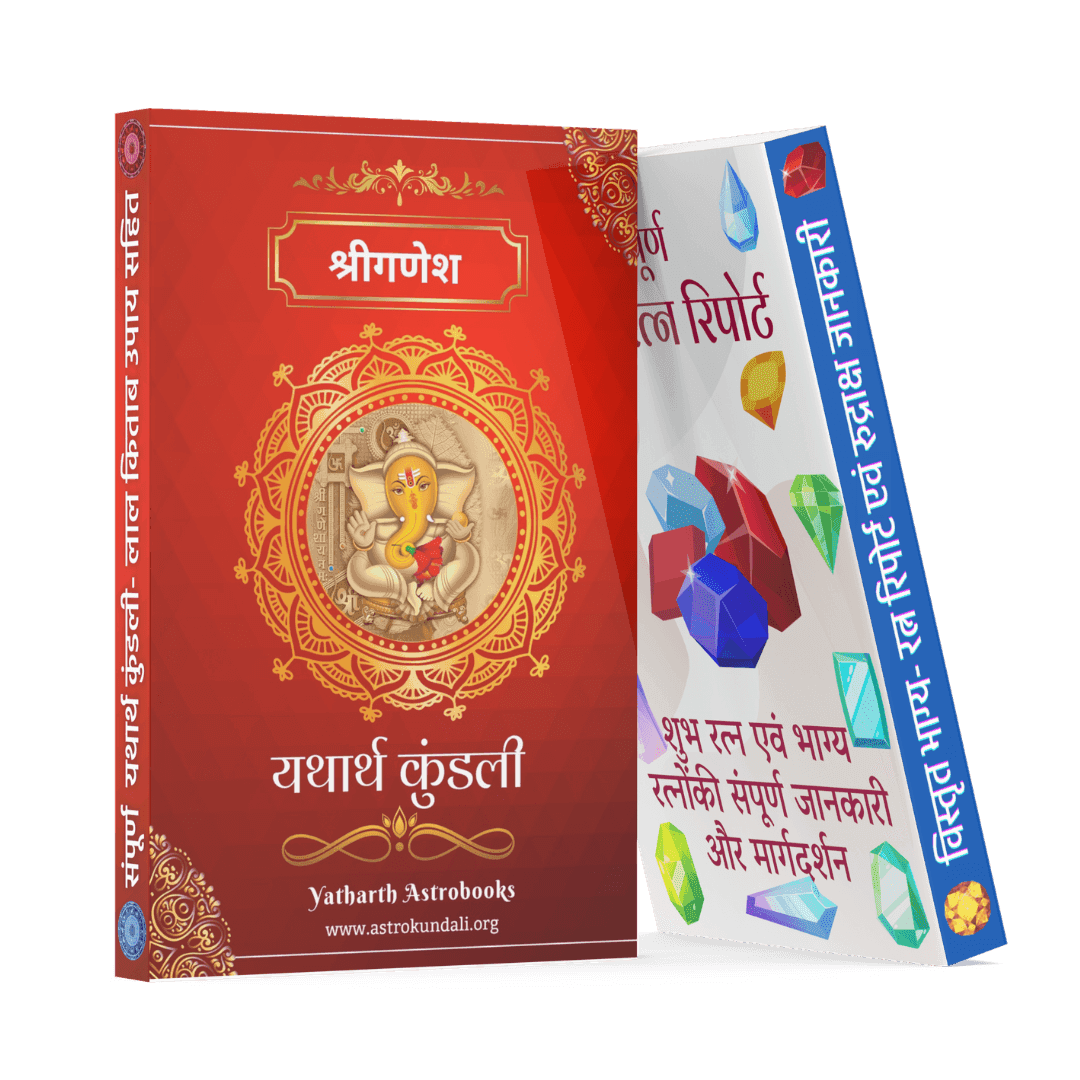
Limited Time Combo Offer
Yatharth Kundali + Gem-Stones Report
Still Feeling Lost?
Some things are easier to understand out loud than on a page. Book a one-on-one consultation and we'll walk through your report together.
Book a Consultation